
 By
By 
Nelle scorse settimane, noi dell’isola di ComixIsland.it abbiamo avuto la possibilità di recensire grazie a IDW il volume inedito in Italia Ionheart e di chiacchierare in maniera esclusiva con il suo autore.
Il fumettista austriaco Lukas Kummer, noto per la sua capacità di fondere immaginazione visionaria e uno stile grafico essenziale, che con Ionheart, la sua prima opera tradotta in inglese. In questa intervista esclusiva, ci racconta le origini del progetto, i suoi riferimenti culturali e i temi più profondi che attraversano la storia.
Ionheart combina elementi di fantasy classico e distopia post-apocalittica. Qual è stata la scintilla iniziale che ti ha portato a creare questo mondo?
L’idea mi è venuta anni fa, quando stavo leggendo molto sulla cultura azteca.
Cercavo di immaginare il momento in cui incontrarono per la prima volta gli spagnoli, e quanto tragiche furono le conseguenze…
Volevo realizzare una storia con un simile scontro di mondi, ma ho scelto invece di affidarmi agli scenari più stereotipati del fantasy e della fantascienza.
Ho usato riferimenti pop che considero un “linguaggio culturale comune”: così non c’era bisogno di spiegare troppo, perché quei mondi li conosciamo già tutti.
Il protagonista di Ionheart affronta minacce esterne e conflitti interiori. Come hai costruito il suo percorso emotivo e che messaggio speri arrivi ai lettori?
Uno dei temi centrali è l’evasione e il fatto che, in realtà, non offra una vera via di fuga.
Il protagonista cerca di scappare, ma i problemi della sua realtà continuano a insinuarsi nella sua fantasia fino a diventare impossibili da ignorare.
Il tuo stile è spesso descritto come una fusione tra realismo e immaginazione visionaria. In Ionheart, quali riferimenti ti hanno guidato di più, e come li hai tradotti sulla pagina?
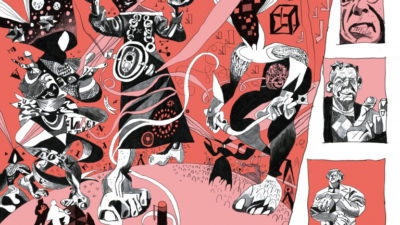
La principale fonte di ispirazione è stata tutta la cultura pop che la nostra generazione ha consumato da bambini.
Ci sono citazioni esplicite a film o libri, ma in generale volevo evocare quella sensazione che provavo guardando i cartoni animati del sabato mattina.
Poi c’è anche un aspetto pratico: l’economia del disegno. Un fumetto richiede tantissimo lavoro e poco tempo, quindi ho cercato di sviluppare uno stile minimalista, quasi una versione cyberpunk di Tintin.
Essendo il tuo primo lavoro pubblicato in inglese, hai incontrato difficoltà nel raccontarlo o nell’adattarlo a un pubblico internazionale?
Non particolarmente.
Dipende da cosa scrivo, se penso in inglese o in tedesco. Credo di aver persino scritto Ionheart in inglese, poi tradotto in tedesco, e infine averlo ritradotto di nuovo in inglese…
Dietro il mondo radioattivo e la lotta contro un demone, Ionheart affronta anche temi più profondi. Quali riflessioni speri che i lettori portino con sé?
A dire il vero non lo so con precisione.
Ionheart è diventato un contenitore per temi personali e osservazioni sulla mia vita e su quella degli altri. Per esempio, mi sono reso conto che spesso ripetevo gli stessi errori pur sapendo che erano errori — e vedevo quasi tutti lottare con questo stesso problema.
Mi sono chiesto: perché è così difficile sfuggire a se stessi? È predisposizione? Programmazione? In un certo senso, Ionheart è il tentativo di rispondere a una domanda che non so ancora formulare.
E poi, come dici tu, è anche la storia di un robot del futuro che diventa un cavaliere.Quindi ognuno può interpretarla a modo suo.
Ringraziamo nuovamente Lukas Kummer e IDW per la possibilità di quest’intervista.
English Version
In recent weeks, we at ComixIsland.it had the opportunity, thanks to IDW, to review the yet unpublished in Italy volume Ionheart and to have an exclusive conversation with its author.
The Austrian cartoonist Lukas Kummer, known for his ability to blend visionary imagination with an essential graphic style, presents with Ionheart his first work translated into English. In this exclusive interview, he tells us about the origins of the project, his cultural references, and the deeper themes that run through the story.
Ionheart combines elements of classic fantasy and post-apocalyptic dystopia. What was the initial spark that led you to create this world?
The idea came to me years ago, when I was reading a lot about Aztec culture.
I tried to imagine the moment they first met the Spanish, and how tragic the consequences turned out to be…
I wanted to create a story with a similar clash of worlds, but instead I decided to rely on the most stereotypical settings of fantasy and science fiction.
I used pop culture references that I consider a “shared cultural language”: this way there was no need to explain too much, because we all already know these worlds.
The protagonist of Ionheart faces both external threats and inner conflicts. How did you build his emotional journey, and what message do you hope reaches readers?
One of the central themes is escapism and the fact that, in reality, it doesn’t provide a real escape.
The protagonist tries to run away, but the problems of his reality keep creeping into his fantasy until they become impossible to ignore.
Your style is often described as a fusion of realism and visionary imagination. In Ionheart, which references guided you the most, and how did you translate them onto the page?
The main source of inspiration was all the pop culture our generation consumed as children.
There are explicit references to movies or books, but in general I wanted to evoke the feeling I had watching Saturday morning cartoons as a child.
Then there’s also a practical aspect: the economics of drawing. A comic requires a lot of work and very little time, so I tried to develop a minimalist style, almost like a cyberpunk version of Tintin.
Since this is your first work published in English, did you encounter any difficulties in telling the story or adapting it for an international audience?
Not particularly.
It depends on what I’m writing whether I think in English or in German. I think I even wrote Ionheart in English first, then translated it into German, and finally translated it back into English…
Behind the radioactive world and the battle against a demon, Ionheart also deals with deeper themes. What reflections do you hope readers will take away?
To be honest, I don’t know exactly.
Ionheart has become a container for personal themes and observations about my life and that of others. For example, I realized that I often repeated the same mistakes even though I knew better — and I saw almost everyone struggling with the same issue.
I asked myself: why is it so hard to escape yourself? Is it predisposition? Programming? In a way, Ionheart is an attempt to answer a question I don’t even know how to properly formulate.
And then, as you said, it’s also the story of a robot from the future who becomes a knight.So, everyone is free to interpret it in their own way.
We would like to thank once again Lukas Kummer and IDW for this interview opportunity.










Comments